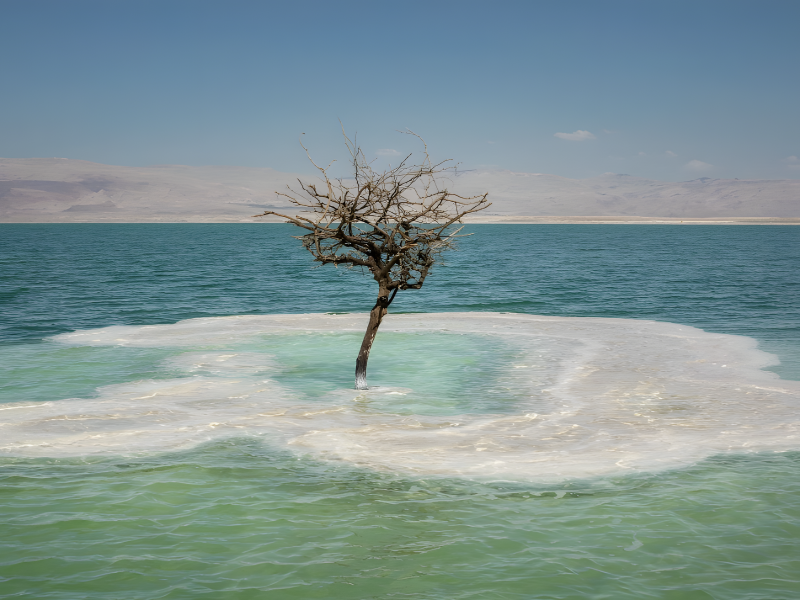
The Dead Sea: A Unique Hypersaline Lake Despite its name, the Dead Sea is actually a hypersaline lake, making it the deepest lake on Earth in terms of its position below sea level. Here’s a closer look at its distinctive features:
Depth and Location Maximum Depth: The Dead Sea reaches a maximum depth of about 1,004 feet (306 meters), but its location at approximately 433 meters below sea level sets it apart from other bodies of water. Extreme Salinity Salinity Levels:
With a salinity of around 34%, the Dead Sea is significantly saltier than the ocean, which averages about 3.5%. This extreme salinity is due to its landlocked nature and the high evaporation rates in the region's hot, dry climate.
Impact on Life:
The high salinity creates an environment where few organisms can survive, leading to the lake's name. However, recent studies have identified microbial life that has adapted to these extreme conditions, challenging the belief that the lake is entirely devoid of life.
Mineral Richness Mineral Content: The Dead Sea is rich in minerals such as magnesium, potassium, and bromine. These minerals contribute to the lake's therapeutic properties and have led to the development of a robust cosmetics and wellness industry. Economic and Cultural Significance Cosmetics Industry:
The unique mineral composition has made Dead Sea products highly sought after in skincare and wellness, emphasizing the economic importance of this remarkable body of water.
Cultural Impact:
The Dead Sea has been a site of historical and cultural significance for centuries, attracting visitors seeking its health benefits and natural beauty.
Conclusion The Dead Sea is a fascinating hypersaline lake that defies its name. Its unique geological position, extreme salinity, and rich mineral content contribute to its ecological and economic significance, making it a remarkable natural wonder that continues to intrigue scientists and visitors alike.